

Most of the time,
Most of the time, the desert locust, Schistocerca
gregaria, is an innocuous grasshopper: a green or brown
short-winged insect that lives a solitary life in the deserts of
Africa, Arabia and Asia. But in certain conditions – when there’s
lots of moisture and vegetation flourishes – these locusts enter a
“gregarious phase”, and undergo a remarkable transformation.
Their brains change, they turn yellow and black, and their wings
grow. Most importantly, they become attracted to each other and
start joining together in swarms which can reach a density of 15
million insects per square mile, and travel up to 90 miles in a
day. Since late 2019, vast clouds of these locusts have devastated
parts of the Horn of Africa, devouring crops and pasture,
triggering a huge operation to track and kill them.
Where did the locusts come from?
In 2018, two unusual cyclones – linked to climate change –
deposited rain in the remote Empty Quarter of the Arabian
peninsula, which led to an 8,000-fold increase in locust numbers
there.
In 2019, strong winds blew the growing swarms first into Yemen,
then across the Red Sea into Somalia, Ethiopia, Eritrea and Kenya,
where their populations were further boosted by a wet autumn, and a
cyclone in Somalia – paving the way for a major emergency last
year. Billions of the insects swept on, into Uganda, South Sudan
and Tanzania, going on to affect a total of 23 countries, from
Sudan to Iran to Pakistan.
How big were the plagues?
In Kenya, they were the worst in 70 years. When they arrived in
East Africa, witnesses said it was “like an umbrella had covered
the sky”. “The first swarms we saw were massive – three or four
kilometres wide and a thousand metres deep,” Mark Taylor, a farmer
in the Laikipia region of northern Kenya, told The Sunday
Times[1].
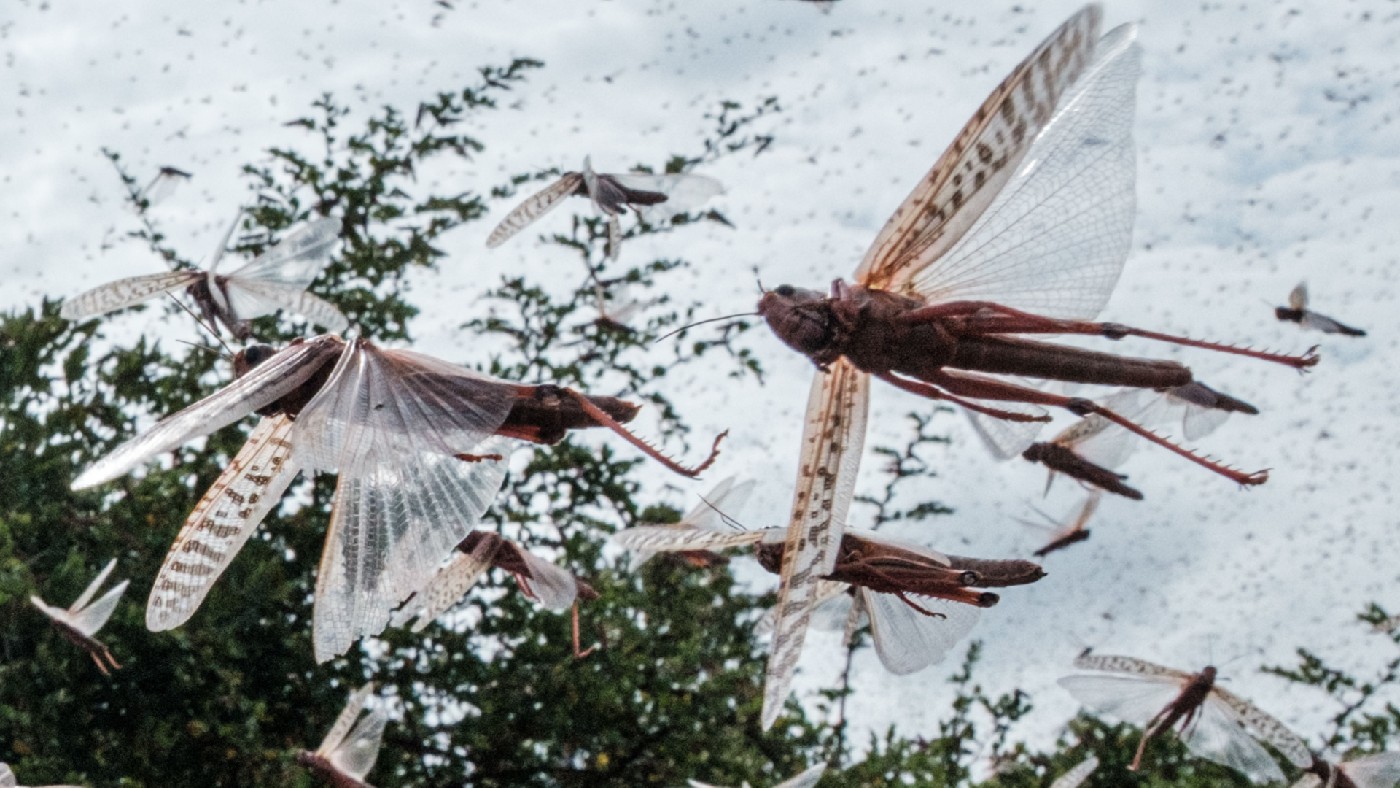
When the locusts settled on trees, there were “so many of them
that branches broke under the weight”. Locust swarms can vary from
less than one square kilometre to several hundred square
kilometres. There can be at least 40 million and sometimes as many
as 80 million locust adults in each square kilometre. One swarm in
northern Kenya was reported to have reached 2,400 square kilometres
in size – an area the size of Luxembourg.
How bad was the damage?
Locusts eat their body weight in food every day; a small swarm
covering one square kilometre can eat the same amount as 35,000
people. So when they descended on East Africa, vast swathes of
vegetation were consumed within minutes. “They attacked
everything,” says Mark Taylor. “Fifty-four hectares [133 acres]
were destroyed just like that.”
In Ethiopia, Kenya and Somalia alone, 19 million farmers and
herders suffered severe damage to their livelihoods. Some 200,000
hectares of land were damaged in Ethiopia alone between January and
October last year. And without intervention by the UN’s Food and
Agriculture Organisation (FAO), the consequences could have been
far graver.
What did the UN do?
When the crisis first hit, countries in East Africa were
woefully under-prepared to deal with an invasion on such a scale.
The FAO, too, was caught off guard by the size of the challenge.
Yet it quickly gathered resources and before long began a massive
aerial and ground assault. It assembled a “locust fighting force”
made up of 28 airplanes and helicopters, 260 ground units, and some
3,000 newly trained spotters and control operators.
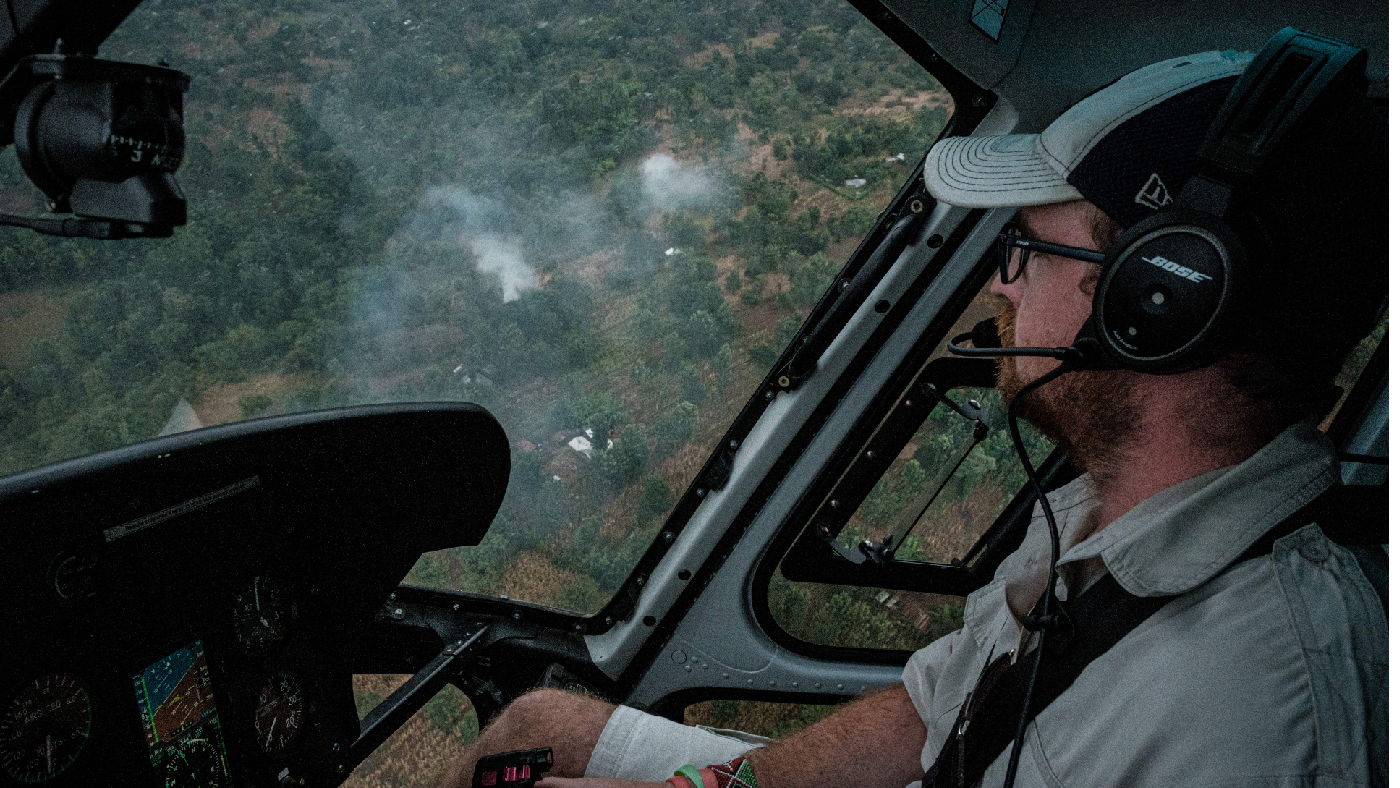
Planes and teams of young volunteers armed with knapsack
sprayers doused an area of two million hectares with almost half a
million gallons of chemical insecticides, at a cost of $219m.
The FAO estimates that this action saved the livelihoods of 40
million people, and crop and livestock production worth $1.7bn. Yet
the response has raised alarm bells among experts, who warn it
could have dire consequences for the environment.
Why might the consequences be
dire?
Because of the pesticides being used – in particular, three
organophosphates: chlorpyrifos, fenitrothion and malathion.
Sometimes referred to as “junior-strength nerve agents” because of
their kinship to sarin gas, these pesticides are banned in Europe
and much of the US.
There are also concerns about another, deltamethrin. All four
chemical insecticides are classified by the FAO itself as posing a
high risk to bees, at least a medium risk to ants and termites, and
a low risk to birds; it recommends that they should be used only as
a last resort.
The FAO’s list of pesticides hasn’t been reassessed in six
years, despite the world becoming more environmentally conscious in
that time. Activists claim that, as well as causing extensive
damage to biodiversity, these chemicals harm livestock and have led
to increased cancer rates in villages near where they have been
used. They question why (more expensive) organic products that lose
their potency within 24 hours of use haven’t been employed
instead.
Has the risk gone away?
No. Kenya declared itself locust-free on 1 November, but there
were reports of a re-invasion in parts of the country just a day
later. Two weeks earlier, the FAO had warned that swarms could
migrate to other areas of East Africa as dryer weather sets in. And
though the situation isn’t as severe as it has been, locusts remain
present in countries including Somalia, Ethiopia and Eritrea.
The FAO is maintaining its surveillance and control missions.
There are particular fears that locust swarms forming in northern
Ethiopia could aggravate severe food shortages in the country’s
war-torn Tigray region, where some 900,000 people are estimated to
already be at risk of famine. And in Somalia, an FAO-led operation
has already begun spraying again – using the same cocktail of
insecticides as in the past.
References
- ^
The
Sunday Times (www.thetimes.co.uk)
Get A Domain Name And Hosting On Dotifi.com.uk Today Click Link to get 10percent Off ! https://dotifi.co.uk/news/science-health/954861/east-africa-locust-plagues
Spread the love & Comment on Social Media !