

In many ways, Norway
In many ways, Norway is exceptionally green. About 95% of its
electricity comes from hydropower, and nearly all the rest from
other renewables such as thermal and wind.
It has the highest per capita use of electric cars of any
country in the world: in September, a whopping 77.5% of new cars
sold there were electric. The capital Oslo has been redesigned to
remove parking spaces and to encourage walking and cycling. Norway
was one of the first nations to introduce a carbon tax, which is
expected to raise over £500m in 2021.
It was also the world’s first industrialised nation to ratify
the Paris
Agreement[1] aimed at keeping global
warming well below 2°C above pre-industrial levels, and, in 2016,
its parliament agreed on a goal to cut the country’s net greenhouse
gas emissions to zero by 2030. Yet at the same time, paradoxically,
Norway benefits from a big oil and gas industry.
How big exactly?
Huge, particularly relative to its population of only 5.4
million. Norway is Europe’s second-largest oil and gas producer,
behind only Russia, producing four million “barrels of oil
equivalent” per day. It provides about a quarter of the EU’s gas
imports. The industry is the nation’s top moneymaker, accounting
for around 14% of its GDP and 40% of its exports. It employs some
200,000 people (over 5% of the total workforce).
Norway’s sovereign wealth fund, set up 30 years ago in order to
invest North Sea oil profits, is now the world’s largest: it is
worth $1.4trn, and owns on average 1.4% of every single listed
company in the world. Norway is, Time magazine declared, “the most
fossil fuel-dependent industrialised democracy in the world”.
Why is this in the news now?
Partly because, at this year’s general election, the issue
dominated the agenda: smaller parties on the Left such as the Green
party wanted an immediate halt to oil and gas exploration. And
partly because of Cop26[2] – where Norway won the
inaugural “Fossil of the Day” award from the Climate Action
Network.

The group complained that the Norwegian government “likes to
play the climate champion” while behind closed doors it is a“fossil
fuel cheerleader”; that it lobbies for the oil and gas industry,
arguing in favour of drilling in the Arctic; and that it has
consistently failed to meet its climate targets. On current trends
it will cut carbon emissions by, at best, only 21% on 1990 levels
by 2030.
How does it justify its position?
Traditionally, Norway has dealt with its climate and oil
policies separately. This was made easier since, conveniently,
under the Paris Agreement, emissions are counted where fossil fuels
are consumed, not where they are extracted. So even though the oil
and gas exported from Norway last year would emit about 450 million
tons of carbon dioxide if burnt (about nine times the nation’s
total annual emissions), it could remain a carbon exporter on this
scale and still technically cut its emissions to net zero.
Norway’s two main political parties, Labour and the
Conservatives, both take the view that it would actually be bad for
the global environment if Norway stopped producing oil and gas.
How does that argument work?
Norway’s drilling operations are said to be the cleanest in the
world. If these are stopped, it’s argued, global demand would stay
the same but Norway’s cleaner oil and gas would be replaced by
dirtier products with higher emissions. In a punchy defence of the
industry, the new Labour prime minister, Jonas Gahr Støre, said
that a rapid end to Norwegian hydrocarbon production “would put a
stop to an industrial transition that is needed” if Europe is to
reach its green goals.
As the world cuts out coal and oil to reduce emissions it will
have to rely more and more on natural gas; and geopolitically,
without Norway, Europe would grow increasingly dependent on
Vladimir Putin’s Russia.
Is the oil industry controversial in
Norway?
It is widely criticised. In Norway’s media, there are frequent
references to oljeskam: “oil shame”, a concept derived from the
Swedish idea of “flight shame”. Many Norwegians, particularly young
people, would like to wean their country off oil. Campaigners have
launched court cases against the government for failing to curtail
exploration.
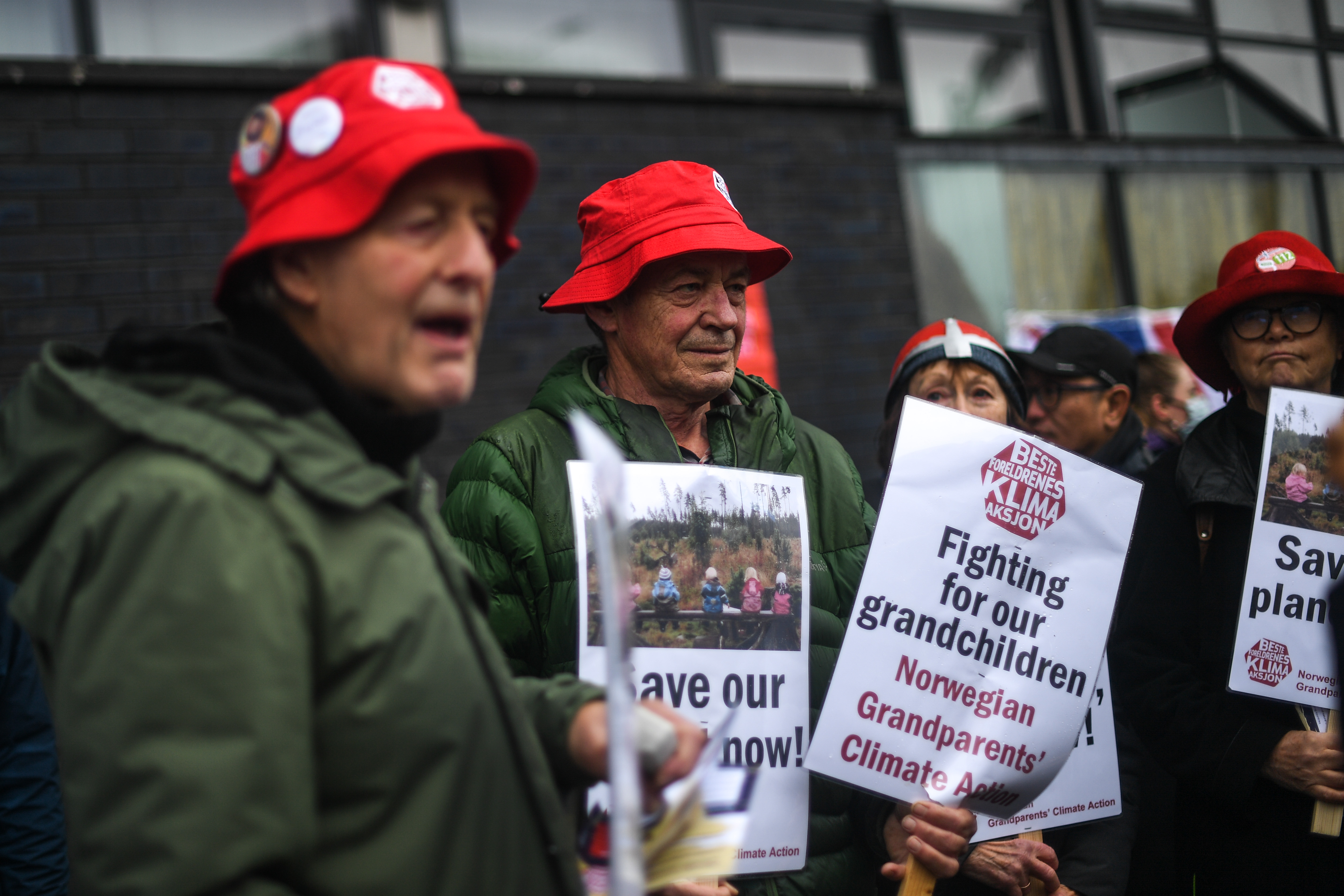
Yet polls show that just over half of people in Norway still
support the industry. Fossil fuels, after all, have helped turn the
country into one of the richest in the world (it has the
11th-highest global GDP per capita according to the World Bank).
This year, the government expects to get more than $20bn from oil
taxes, fees and dividends. Most of this goes into the national
budget, supporting a lavish welfare state. The rest will go into
the sovereign wealth fund, for a rainy day.
What will happen in the future?
After a dip at the beginning of the century, Norway has been
ramping up oil production. In 2019, some 57 exploration wells were
drilled, and a record-breaking 83 new production licences were
issued. The new centre-left government has said that it will seek
to grow the oil and gas industry while striving to cut carbon
emissions by, for instance, electrifying oil platforms.
It also aims to use oil money to “finance a green transition”,
notably by developing carbon capture and storage, and blue hydrogen
(hydrogen produced from fossil fuels while capturing carbon
emissions). Both technologies have great potential, but neither are
remotely ready to be used at scale.
The world as a whole is facing a colossal “production gap”: a
discrepancy between governments’ planned fossil fuel production,
and the levels needed to keep global temperatures rises well below
2°C. And most nations have yet to align their green ambitions with
reality. Norway, though, faces this contradiction in a particularly
acute form.
References
- ^
Paris Agreement
(www.theweek.co.uk) - ^
Cop26
(www.theweek.co.uk)
Get A Domain Name And Hosting On Dotifi.com.uk Today Click Link to get 10percent Off ! https://dotifi.co.uk/news/world-news/europe/954938/is-norway-a-climate-hypocrite
Spread the love & Comment on Social Media !